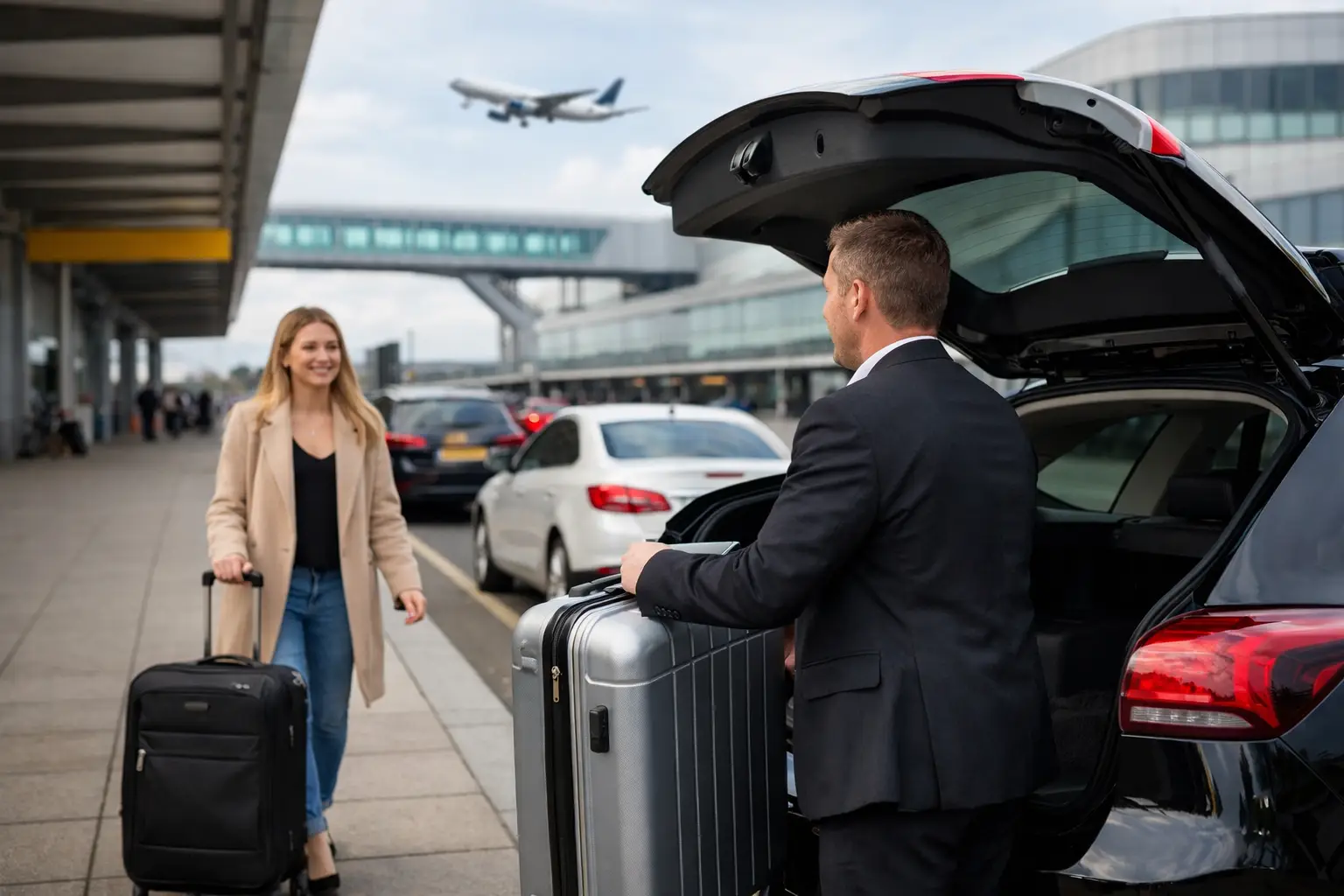
A Gatwick collection can unravel in minutes when a passenger expects to be met at the kerb, while the driver is required to use a designated parking area. Understanding Gatwick pickup rules before the journey removes that uncertainty. It allows the driver to arrive correctly, the passenger to leave the terminal with confidence, and everyone to avoid unnecessary circulation, parking charges or missed calls.
For business travellers, families and cruise passengers travelling from Portsmouth, Southampton, Havant and the wider South Coast, the return journey deserves the same care as the outbound airport transfer. A professional pickup is not simply a car waiting nearby. It is a planned handover, timed around the flight, baggage reclaim and the correct terminal arrangements.
Gatwick Pickup Rules at a Glance
Gatwick operates North Terminal and South Terminal, each with its own road access, parking facilities and passenger flow. Private vehicles and pre-booked chauffeurs should not assume that they can wait on terminal roads or collect passengers from any convenient kerbside location.
In practical terms, collections are normally made through the approved short-stay parking arrangements or another designated collection facility. Terminal forecourts, bus stops, taxi areas, drop-off routes and roadways are controlled spaces. Stopping or waiting where it is not permitted can cause congestion and may result in enforcement action.
The precise layout, tariffs, entry process and available bays can change, particularly during airport works or periods of high demand. Drivers should always follow the signs in place on arrival and use the terminal-specific parking option appropriate to a pickup. The key principle is simple: do not treat the terminal approach road as a waiting area.
Choose the Right Terminal Before You Set Off
The most avoidable Gatwick pickup mistake is going to the wrong terminal. A flight number, rather than a booking confirmation alone, gives the clearest starting point. Check whether the passenger is arriving at North or South Terminal, and confirm this again on the day of travel.
Although the terminals are connected, moving between them takes time. The inter-terminal shuttle is useful for passengers travelling without a tight schedule, but it is not an ideal solution when someone has just landed with luggage, children or mobility requirements. A driver who has entered the wrong car park may also need to exit, reposition and pay for additional parking time.
For a chauffeur collection, it is sensible to agree the terminal and meeting instructions before departure. If a flight is moved, delayed or diverted, the plan can then be adjusted before the driver reaches the airport roads.
Do Not Plan Around the Landing Time
A scheduled landing time is not the same as the time a passenger is ready to leave the terminal. Aircraft can wait for a stand, border control queues vary, checked luggage can be delayed and some travellers need time to freshen up, collect equipment or assist children.
As a guide, passengers travelling with cabin baggage only may be ready sooner than those checking bags or arriving from a long-haul route. However, there is no reliable fixed allowance for every flight. The best approach is to monitor the flight and retain direct communication with the passenger.
A disciplined driver does not enter paid pickup parking far too early simply because the aircraft has touched down. Equally, a passenger should not be asked to stand outside with cases while the vehicle is still navigating the airport. Good timing protects both comfort and cost.
Where Should Passengers Meet Their Driver?
The most dependable meeting point is one that is clear, sheltered where possible, and easy to describe without relying on vague instructions such as “outside arrivals”. Depending on the collection arrangement, a chauffeur may meet the passenger inside the terminal arrivals area or ask them to proceed to the agreed short-stay car park level or bay.
An inside-terminal meet and greet is often the most comfortable option for executive travellers, first-time visitors, families and anyone carrying substantial luggage. The driver can assist from the moment the passenger exits baggage reclaim, then accompany them to the vehicle using the approved route.
Where the passenger is asked to meet at the car park, provide specific instructions before the flight lands: terminal name, car park, level where relevant, a visible meeting landmark and the vehicle details. This is particularly valuable at busy times, when several passengers may be leaving the terminal simultaneously.
Do not ask a passenger to cross active roadways, wait in a restricted lane or search for a vehicle in a taxi rank. Apart from being inconvenient, it can place them in an unsafe or prohibited area. A premium transfer should feel composed from the first conversation after landing.
Waiting, Parking and Airport Charges
Waiting time is one of the main trade-offs in any airport collection. Parking close to the terminal is convenient and reduces the distance passengers must walk, but it is usually the more expensive choice. Waiting further away may reduce parking costs, yet it introduces a risk: the passenger may be ready before the driver can reach the terminal during congestion.
For this reason, a planned chauffeur service will usually balance live flight information with the passenger’s confirmation that they have cleared the terminal. The driver can then enter the approved pickup area at the right moment, rather than waiting for an open-ended period.
Allow for airport parking fees in the quoted transfer arrangement, particularly if meet and greet or extended waiting has been requested. A transparent booking should make clear what is included, how long the driver will wait after the agreed collection time, and what happens if a flight delay becomes substantial.
Drivers should also be aware that airport car parks may use automated number plate recognition. Follow the instructions at the entrance and exit, retain any relevant confirmation, and avoid relying on an informal arrangement that may not be valid for the location being used.
A Better Pickup Plan for Delays and Disruption
No pickup plan can eliminate disruption, but it can prevent a delayed flight becoming a stressful experience. Before the journey, exchange a working mobile number, flight number and passenger name. International arrivals should be able to connect to mobile data or use airport Wi-Fi so they can send a short update after landing.
If the flight is delayed, the passenger should avoid rushing towards the exit until the driver confirms the revised plan. The driver, meanwhile, should continue to monitor the arrival status and traffic conditions rather than making repeated laps around the terminal roads.
A diversion is different from a delay. Should an aircraft land at another airport, the collection arrangement may need to be completely reorganised. This is where an experienced provider adds real value: clear communication, calm decision-making and a realistic revised collection time are far more useful than promises that cannot be kept.
For corporate travellers, it is worth providing an assistant or office contact as a secondary number. If the passenger is in the air or dealing with a device issue, the pickup can still be managed without uncertainty.
Travelling with Children, Luggage or Extra Requirements
Gatwick pickup rules apply to every vehicle, but the practical plan should reflect the people being collected. Families may need suitable child seats arranged in advance. Passengers returning from a long holiday may have several large cases. Guests with reduced mobility may need a shorter, more direct route from arrivals to the vehicle.
These details should be confirmed at booking stage, not improvised at the terminal. The right vehicle size, luggage capacity and collection method make a material difference. A saloon may suit an individual executive with hand luggage, while a larger vehicle is more appropriate for a family, sports equipment or cruise cases.
The same applies to assistance. A courteous chauffeur can handle luggage and provide an unhurried welcome, but airport staff support may also be needed for passengers who have pre-arranged special assistance. Build sufficient time into the collection so that nobody feels pressured to navigate a busy airport environment.
Why Advance Booking Makes Gatwick Collections Easier
Pre-booking provides the information that turns a potentially awkward airport pickup into a controlled service. The driver knows the flight, terminal, passenger count, luggage requirements and agreed meeting point before leaving the South Coast. The passenger knows who is collecting them and how to make contact.
At 4U Travel Solutions, airport transfers are planned around punctuality, professional presentation and passenger comfort. Flight monitoring and clear collection instructions help ensure the service responds to the reality of air travel rather than an optimistic timetable.
For passengers, the final responsibility is equally straightforward: keep your phone available after landing, follow the agreed meeting instructions, and contact your driver if circumstances change. With the correct terminal, approved pickup location and a little patience around baggage reclaim, Gatwick arrivals can end exactly as they should – calmly, safely and without a last-minute search for the car.